
Winter Lawn Care Tips: Protect Your Grass Before the Thaw
As winter sets in, it’s important to protect your lawn from both ice-melting products and heavy snow accumulation. In this article, we’ll walk you through practical steps to keep your turf healthy all season long so it can bounce back strong in spring.
Understanding How Salt and Snow Piles Impact Your PA, NJ or DE Lawn
Salt & Deicing Materials
Deicing products play an important role in winter safety, but it’s helpful to understand how different salts interact with your lawn.
Some deicers can move into the soil, disrupt the natural nutrient balance, and place your turf under stress.
Over time, this stress may appear as brown edges along walkways, thinning grass, or weakened growth where products are frequently applied.
Snow Piles
Snow piles can have a similar impact when they build up in the same areas throughout the season.
Deep, lingering piles create a cold, saturated environment that blocks sunlight and limits airflow to the grass. These conditions are ideal for snow mold, a fungal disease that often becomes visible as temperatures rise and the snow starts to melt.
By learning how salt and snow influence your lawn, you’re better prepared to prevent winter damage before it starts.

Smart Snow Removal Strategies to Shield Your Turf
How you move snow matters. Try these tips:
- After shoveling or using a snow blower, spread snow more evenly across the lawn instead of creating large piles. This encourages a more uniform melt, cuts down on overly wet areas, and reduces the likelihood of snow mold.
- As winter tapers off, break apart any lingering snow banks. This simple step speeds up melting and lets more air and sunlight reach the grass underneath, helping your lawn transition into spring more smoothly.
Eco-Friendly Alternatives for Safer Winter Deicing
When it comes to deicing, choosing the right product can make a big difference for your lawn and local environment. Look for more environmentally friendly options—such as blends containing calcium magnesium acetate or potassium chloride—that are designed to be gentler on turf and soil.
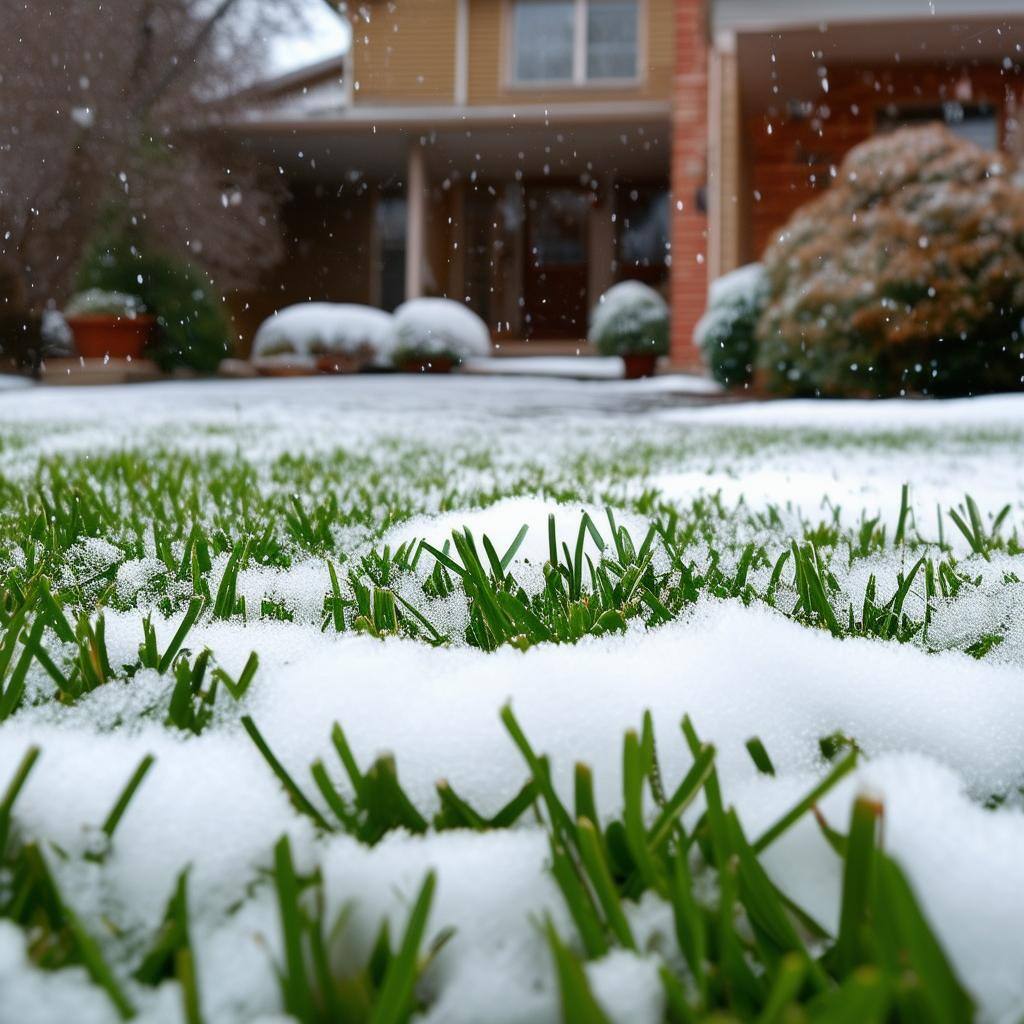
Whenever possible, choose products labeled lawn safe or pet friendly, apply only what you truly need, and sweep any leftover granules back up once the ice has melted.
These small habits help protect your grass and nearby waterways.
Essential Lawn Care Steps for a Strong Spring Recovery
If your lawn shows signs of stress from winter salt or snow piles, early spring care can help it recover. Lightly rake matted areas to improve air circulation, then overseed thin or bare spots to rebuild dense, healthy turf. A balanced, slow-release fertilizer can support new growth and strengthen roots.
Spring aeration is also beneficial in lawns that saw a lot of snow piling or foot traffic.
By relieving surface compaction, aeration allows water, oxygen, and nutrients to move more freely to the root zone.
How Professional Lawn Care Supports Your Lawn Year-Round
Working with a professional lawn care team ensures your lawn has a plan for every season; from choosing smarter deicing practices to repairing salt and snow damage once warmer weather arrives.
Our certified technicians combine regional expertise with customized programs to address winter stress and promote long-term turf health.
With scheduled visits and targeted treatments, you can step into spring with confidence, knowing your lawn is set up to be greener, thicker, and more resilient after winter’s challenges.