Lawn Fertilization Cost in PA: What You Pay For
Find out what goes into the cost of our services here at Green Lawn Fertilizing!
Getting quotes for lawn fertilization in Pennsylvania can feel overwhelming. One company promises seven applications, another mentions eight. Some include weed control, while others list it as an add-on. And the price ranges? They're all over the map.
If you're a Pennsylvania homeowner trying to figure out what lawn fertilization actually costs—and what you're paying for—you're in the right place. This guide breaks down typical pricing in PA, explains what should be included in each visit, and gives you a simple checklist for comparing providers like Green Lawn Fertilizing and other local companies.
By the end, you'll know exactly how to evaluate a lawn care quote and make a confident decision for your property.
Key Takeaways: Lawn Fertilization Cost in PA
- Lawn fertilization costs in Pennsylvania typically range based on lawn size, number of applications, and included services.
- A standard fertilization visit should include nutrient application, broadleaf weed control, and often pre-emergent crabgrass prevention.
- Key pricing variables include lawn square footage, program length, treatment count, and optional add-ons like grub or fungicide control.
- Green Lawn Fertilizing offers customized programs with state-certified technicians and a 100% service guarantee for PA homeowners.
- Always request a detailed breakdown of what each application includes before signing with any lawn care provider.
What Affects Lawn Fertilization Cost in Pennsylvania?
Before comparing quotes, it helps to understand what drives lawn fertilization pricing. Several factors determine what you'll pay for professional lawn care in PA.
Lawn Size and Square Footage
Your lawn's square footage is the primary factor in any quote you receive. Most providers calculate pricing per 1,000 square feet, with costs decreasing slightly per square foot as lawn size increases.
A typical Pennsylvania lawn ranges from 5,000 to 10,000 square feet. Smaller properties in West Chester or Philadelphia suburbs may fall below this range, while rural Chester County properties often exceed it.
Number of Applications Per Year
Most professional lawn fertilization programs in Pennsylvania include between six and eight applications annually. These visits are spaced four to six weeks apart to match your lawn's seasonal nutrient needs.
Fewer applications may save money upfront but often result in inconsistent results. Lawns that receive steady, properly-timed treatments develop deeper roots and thicker turf over time.
Program Type and Included Services
Not all fertilization programs are created equal. Some include only basic nutrient applications, while others bundle weed control, pre-emergent treatments, and pest management into a single plan.
When reviewing quotes, pay close attention to what's bundled versus what's considered an add-on service. This distinction significantly impacts your total annual investment.
What Should a Lawn Fertilization Visit Include?
Understanding what happens during each visit helps you evaluate whether a provider is delivering real value. Here's what a standard professional fertilization application typically includes.
Fertilizer Application
Each visit should include a properly balanced fertilizer application. The specific formulation changes throughout the year to match your lawn's needs—higher nitrogen in spring and early summer for growth, different ratios in fall to prepare roots for winter.
Professional-grade fertilizers differ significantly from what you'd find at a home improvement store. They're formulated for slow release, reducing the risk of burning your grass while delivering nutrients over several weeks.
Broadleaf Weed Control
Most quality programs include broadleaf weed control as part of your regular visits. This targets common Pennsylvania weeds like dandelions, clover, plantain, and ground ivy.
Weed control works best when applied consistently throughout the growing season. A single treatment rarely addresses all weed pressure—that's why program-based approaches outperform one-time applications.
Pre-Emergent Crabgrass Prevention
Early spring visits should include pre-emergent herbicide applications. These create a barrier in the soil that prevents crabgrass seeds from germinating.
Timing matters enormously here. Apply too early, and the barrier breaks down before peak germination. Apply too late, and crabgrass is already growing. Experienced local providers understand Pennsylvania's specific timing windows.
Common Add-On Services and Their Purpose
Beyond the core fertilization program, many providers offer additional services. Some are essential for certain lawns, while others address specific problems.
Grub Control Applications
Grubs—the larvae of beetles—feed on grass roots and can cause significant damage if left untreated. You might notice brown patches that pull up easily, like loose carpet.
Preventive grub control is typically applied in late spring or early summer, before grubs begin feeding actively. Green Lawn Fertilizing includes grub control as part of their Green Lawn Program, applying it during the eighth visit.
Fungicide Treatments
Pennsylvania's humid summers create conditions where lawn diseases like dollar spot, brown patch, and red thread can thrive. If your lawn has a history of fungal issues, fungicide applications may be worth adding to your program.
Not every lawn needs fungicide treatments. A reputable provider will assess your specific conditions rather than automatically adding this service.
Lime Applications for Soil pH
Pennsylvania soils tend toward acidity, thanks to abundant rainfall and naturally acidic parent materials. When soil becomes too acidic, grass roots can't efficiently absorb nutrients—even if you're applying plenty of fertilizer.
A soil test reveals your lawn's pH level. If it falls below the optimal range (6.0-7.0 for most turf grasses), lime applications help restore balance. This isn't typically included in standard fertilization programs but should be recommended when needed.
Aeration and Overseeding
Core aeration isn't fertilization, but it dramatically improves how well your lawn responds to nutrients. By removing small plugs of soil, aeration relieves compaction and allows water, air, and fertilizer to reach roots more effectively.
When paired with overseeding, aeration helps thicken thin or patchy areas. Fall is the ideal time for this service in Pennsylvania, giving new grass seedlings time to establish before winter dormancy.
How to Compare Lawn Fertilization Providers in Pennsylvania
With multiple providers serving West Chester and the greater Pennsylvania area, choosing the right company requires more than comparing bottom-line prices. Here's what to look for.
Ask What Each Visit Includes
Request a detailed breakdown of every application in the program. You want to know exactly what products are being applied and what results to expect from each visit.
Vague descriptions like "fertilizer and weed control" don't tell you much. Look for specifics: What type of fertilizer? Which weeds are targeted? Is pre-emergent included, and during which visits?
Understand the Total Number of Visits
Compare the total number of applications across providers. A program with six visits isn't directly comparable to one with eight—even if the per-application price seems similar.
More isn't always better, but too few visits often means gaps in coverage during critical growing periods.
Verify Technician Credentials
Pennsylvania requires commercial pesticide applicators to hold state certification. Ask whether the technicians treating your lawn are certified by the Pennsylvania Department of Agriculture.
Certified technicians have demonstrated knowledge of proper application techniques, safety protocols, and environmental regulations. This matters for your family's safety and your lawn's results.
Check for Service Guarantees
Reputable providers stand behind their work. Look for satisfaction guarantees that promise free service calls if problems arise between scheduled visits.
Green Lawn Fertilizing backs every program with a 100% service guarantee, returning at no charge if you're not completely satisfied with your results.
Consider Local Expertise vs. National Chains
National franchise operations follow standardized protocols across different regions. While this ensures consistency, it may not account for Pennsylvania-specific conditions.
Local companies often have deeper knowledge of regional soil types, common weed species, and climate patterns. They're also more likely to adjust treatments based on what's actually happening in your area.
What to Expect During a Provider Visit
Knowing what should happen during each visit helps you evaluate the service you're receiving. Here's a typical timeline for professional lawn fertilization.
Before the Application
Your technician should assess your lawn's current condition before applying anything. This includes noting weed pressure, identifying any disease or pest issues, and checking for areas that may need additional attention.
Many providers leave a door hanger or service summary detailing what was done and any recommendations for follow-up care.
During the Application
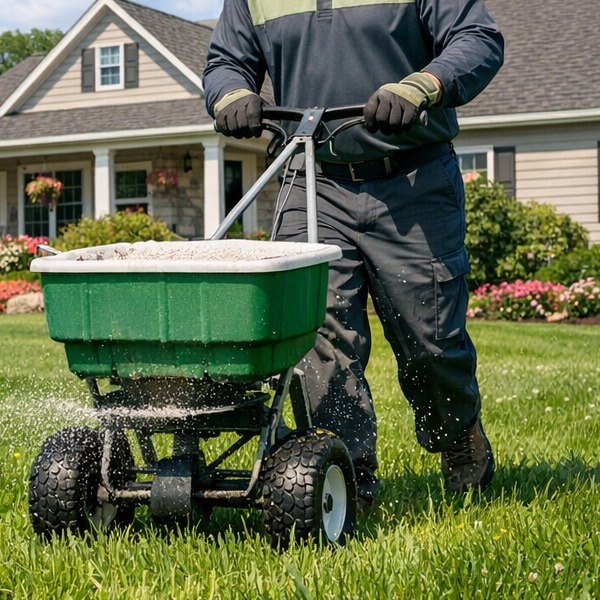
Professional-grade spreaders ensure even distribution of granular products. Liquid treatments target specific weeds or problem areas. The entire process typically takes 15-30 minutes for an average-sized lawn.
You don't need to be home during the visit, but some homeowners prefer to be available for questions or to point out specific concerns.
After the Application
Most applications require you to keep children and pets off the treated areas until the product has dried—typically two to four hours. Your technician should communicate any specific waiting periods.
Watering instructions vary depending on the products applied. Some treatments work best when watered in, while others should remain dry for a period.
Red Flags to Watch for When Getting Quotes
Not every lawn care company delivers on its promises. Watch for these warning signs when evaluating providers.
Quotes Without a Lawn Assessment
Be cautious of companies that quote pricing without measuring your lawn or asking about its current condition. Accurate pricing requires knowing your square footage and understanding existing challenges.
Aerial measurements from satellite imagery are common and acceptable. But the provider should still ask about shade conditions, irrigation systems, and any persistent problems you've noticed.
Unusually Low Pricing
If one quote comes in dramatically lower than others, investigate why. The company may be using lower-quality products, planning fewer applications than claimed, or cutting corners on application rates.
Remember that professional lawn care involves real costs: certified technicians, commercial-grade products, specialized equipment, and insurance. Prices that seem too good often are.
High-Pressure Sales Tactics
Quality providers let their results speak for themselves. Be wary of companies that push you to sign immediately or offer "today only" discounts.
A confident company welcomes comparison shopping and clear information without pressure.
How Pennsylvania Regulations Affect Lawn Care Services
Pennsylvania has specific requirements for fertilizer application that affect both professional providers and homeowners who apply products themselves.
State Certification Requirements
The Pennsylvania Department of Agriculture requires commercial applicators to complete training and pass examinations before applying pesticides on customer properties. This includes the weed control products used in most fertilization programs.
When hiring a lawn care company, you're entitled to ask about their licensing status and request proof of certification.
Environmental Considerations
Pennsylvania's fertilizer regulations include provisions designed to protect waterways from nutrient runoff. Responsible providers avoid applications before heavy rain and maintain setbacks from streams, ponds, and other water features.
These practices protect both the environment and your investment—products that wash away before absorption don't benefit your lawn.
Organic vs. Traditional Lawn Fertilization Programs
Many Pennsylvania homeowners are interested in organic alternatives to traditional lawn care. Understanding the differences helps you choose the right approach for your property.
What Makes a Program Organic?
Organic fertilization programs use naturally-derived nutrient sources rather than synthetic formulations. These products feed soil microorganisms, which in turn release nutrients to grass plants.
True organic programs avoid synthetic herbicides for weed control, relying instead on cultural practices—proper mowing height, dense turf, and healthy soil—to suppress weeds naturally.
Organic Program Considerations
Organic approaches typically take longer to show results. Because nutrients must be broken down by soil organisms before plants can use them, green-up happens more gradually.
Weed control in organic programs requires patience and realistic expectations. Without synthetic herbicides, some weed pressure is normal, especially during the transition period.
Green Lawn Fertilizing offers a Green Lawn Natural Program featuring 100% organic fertilizer for homeowners who prefer this approach.
Checklist for Comparing Pennsylvania Lawn Fertilization Quotes
Use this checklist when evaluating quotes from different providers. Bring it along when meeting with representatives or keep it handy during phone consultations.
Program Details
How many applications are included annually? What specific products are applied during each visit? Is broadleaf weed control included in every treatment?
Does the program include pre-emergent crabgrass control? During which visits is it applied?
Add-On Services
What's the cost for grub control? Is it included or separate? Are fungicide treatments available if needed?
Does the company offer aeration and overseeding? What about lime applications?
Company Credentials
Are technicians state-certified by the Pennsylvania Department of Agriculture? How long has the company served Pennsylvania homeowners?
Is the company locally owned, or is it a national franchise operation?
Guarantees and Service
What satisfaction guarantee does the company offer? Will they return at no charge for problems between visits?
How do you schedule service calls if issues arise?
Why Local Expertise Matters for Pennsylvania Lawns
Pennsylvania's climate and soil conditions create unique challenges for lawns. Understanding these regional factors helps you appreciate why local knowledge matters.
Pennsylvania's Cool-Season Grasses
Most Pennsylvania lawns consist of cool-season grasses: Kentucky bluegrass, perennial ryegrass, tall fescue, or a blend. These grasses thrive in spring and fall, entering stress periods during summer heat.
Fertilization timing must account for this growth pattern. Heavy nitrogen applications during summer stress can actually harm cool-season lawns.
Regional Soil Challenges
Soil conditions vary significantly across Pennsylvania. Chester County's clay-heavy soils behave differently than the sandier soils found in other regions.
Providers with local experience understand these variations and adjust their approaches accordingly. They know which neighborhoods tend toward compaction and which areas have drainage challenges.
Climate Considerations
Pennsylvania's transitional climate means lawns face both cold stress in winter and heat stress in summer. Successful lawn care programs account for both extremes.
Local providers track weather patterns and adjust application timing based on actual conditions—not just calendar dates.
Getting the Most Value from Your Lawn Fertilization Investment
Professional lawn fertilization represents a real investment in your property. Here's how to maximize the return on that investment.
Follow Aftercare Instructions
Your technician's recommendations matter. If they suggest watering after an application, do it. If they recommend avoiding certain activities for a period, follow through.
Small actions on your part can significantly affect how well treatments work.
Maintain Proper Mowing Practices
Fertilization and mowing work together. Cutting too short stresses grass and encourages weed growth. Most cool-season grasses perform best when maintained at 3-4 inches.
Sharp mower blades also matter—torn grass tips are more susceptible to disease and lose more moisture.
Communicate with Your Provider
Let your lawn care company know about changes to your property or persistent problems. Maybe you installed an irrigation system, or perhaps one area consistently struggles despite treatment.
Good providers welcome this feedback and use it to customize their approach.
FAQs about Lawn Fertilization Cost in PA
How much does lawn fertilization cost per application in Pennsylvania?
Lawn fertilization costs vary based on lawn size and program type. Most Pennsylvania homeowners pay per application based on their measured square footage. Green Lawn Fertilizing customizes pricing to your specific property and includes their satisfaction guarantee.
What should be included in a standard fertilization visit?
A standard visit should include a balanced fertilizer application and broadleaf weed control. Early spring visits should add pre-emergent crabgrass prevention. Your technician should also assess your lawn's condition and note any additional concerns.
How many fertilization applications does my Pennsylvania lawn need annually?
Most Pennsylvania lawns benefit from six to eight applications per year, spaced four to six weeks apart. Green Lawn Fertilizing's standard program includes seven fertilizer applications plus grub control, totaling eight visits for complete coverage.
Is grub control included in fertilization programs, or is it extra?
This varies by provider. Some include grub control in their standard program, while others offer it as an add-on. Green Lawn Fertilizing includes grub control as the eighth application in their Green Lawn Program, protecting against root damage without extra charges.
Should I choose a local company or a national chain for lawn fertilization?
Local companies often offer advantages including deeper regional expertise, more personalized service, and direct accountability. Green Lawn Fertilizing has served Pennsylvania homeowners since 2004 with state-certified technicians who understand local soil and climate conditions.
What's the difference between organic and traditional lawn fertilization?
Traditional programs use synthetic fertilizers and herbicides for faster results. Organic programs rely on naturally-derived nutrients and cultural weed control for a more gradual approach. Green Lawn Fertilizing offers both options to match your preferences.
How do I know if a lawn care company is properly licensed in Pennsylvania?
Ask providers directly about their Pennsylvania Department of Agriculture certifications. Reputable companies readily share this information. Green Lawn Fertilizing employs state-certified technicians who meet all Pennsylvania requirements for commercial pesticide application.
What should I do if I'm not satisfied with my lawn fertilization results?
Contact your provider immediately. Quality companies offer satisfaction guarantees and will return to address concerns. Green Lawn Fertilizing backs every program with a 100% service guarantee and free service calls if you're not completely satisfied with your results.