
DIY Fall Lawn Aeration and Overseeding: A Simple Step‑by‑Step Guide
Why Should You Aerate and Seed this Fall?
When done correctly in late summer/early fall, aeration and seeding thickens your lawn, improves root growth, and helps grass outcompete weeds.
See below for a step-by-step on how to properly aerate and seed your lawn!
Step 1: How to choose the best grass seed
The most important choice you make in this project is which seed to use.
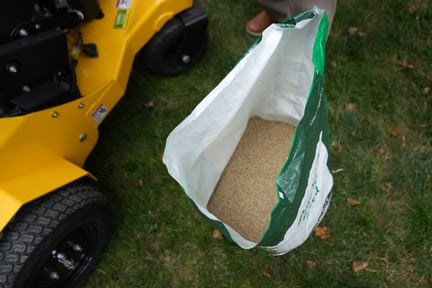
When you look at seed bags, you will see specific varieties listed under the seed tag. These varieties are tested in the National Turfgrass Evaluation Program (NTEP). You can visit the NTEP website and review trial results for different grasses. The data includes ratings for color, density, disease resistance, and stress tolerance in various regions, which can help you confirm that your seed is well suited for the Northeast.
For most home lawns in the Northeast, a high-quality turf-type tall fescue blend is a strong choice because it is durable, tolerant of heat and drought, and less prone to many common lawn diseases and insect issues.
Step 2: How to calculate the right amount of seed for your yard
Once you know the type of seed you will use, the next step is to calculate how much to buy.
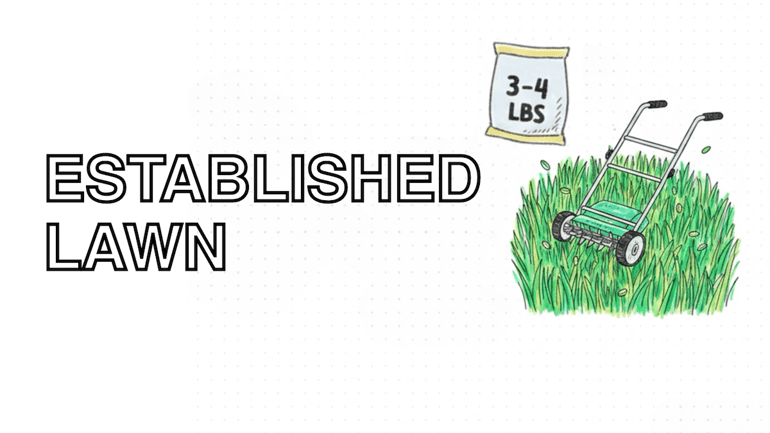
For overseeding an established, mostly healthy lawn with turf-type tall fescue, aim for about 3–4 pounds of seed per 1,000 square feet.
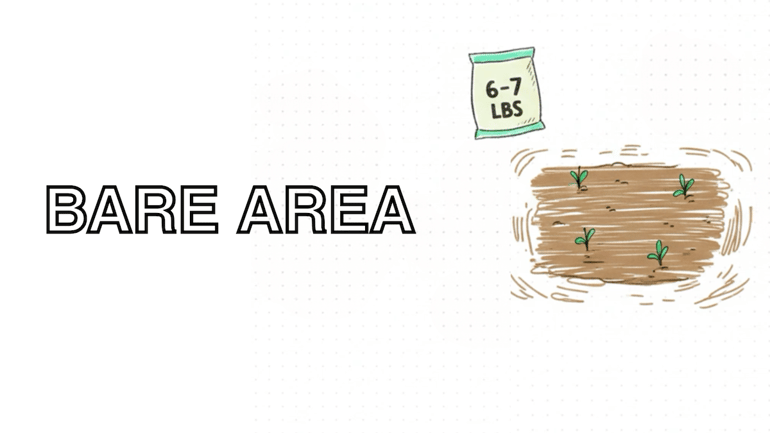
For thin or nearly bare areas, use a higher rate—typically 6–7 pounds per 1,000 square feet—so seedlings can fill in the space and create dense cover.
Step 3: How to choose the right aerator
With your seed plan in place, turn to the equipment: the aerator. There are two common core aerator types available from rental centers and equipment suppliers: walk-behind aerators and ride-on (or stand-on) aerators. Both pull soil cores from the lawn and can be effective when used correctly.
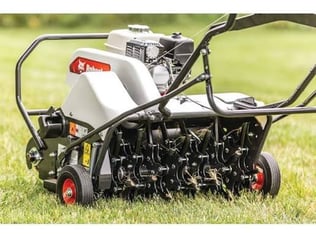 Walk-behind aerators are generally easier for homeowners to handle. They are lighter and simpler to transport in a small trailer or pickup truck. Because they are lighter, they may not always pull cores as deep as heavier ride-on machines, but for many home lawns they still reach a useful depth of around 2 inches when soil is moist.
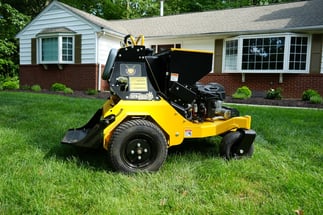 Ride-on aerators are heavier and can often pull deeper cores because of their weight and design. They are very efficient on larger properties, but they may be more expensive to rent and require more experience to operate safely around tight spaces, trees, and landscape beds.
Regardless of type, confirm with the rental location that the machine is a core aerator, not a spike aerator. Core aerators remove plugs of soil and thatch, which relieves compaction more effectively than spikes that simply push holes into already compacted soil.
Step 4: How to prepare your lawn before you aerate and seed
First, adjust your mowing height. For cool-season grasses, this is one of the only times it makes sense to cut shorter, down to about 2 inches. Mowing low just before aeration and seeding helps seed fall through the grass canopy and land on soil instead of getting stuck on the leaf blades.
Second, clear the lawn of branches, toys, and debris, and plan your passes so you cover the entire turf area. Overlapping slightly in different directions (for example, north–south and then east–west) can improve coverage and help ensure that the entire lawn receives multiple cores.
DIY aeration and seeding can be a lot to take on, and if it feels that way, you don't have to do it alone! Our team has the tools and experience to get it done right the first time. Feel free to reach out. We're here to help!